

IVF Failed? Common Reasons and the Next Steps After an Unsuccessful Cycle
An unsuccessful IVF cycle can feel heartbreaking. After weeks of injections, scans, procedures and waiting, a negative pregnancy test may leave you wondering: “Why did my IVF fail?” or “Can I still become pregnant?”
The first thing to remember is that an unsuccessful IVF attempt is not your fault. IVF is a complex process, and success depends on several factors involving the eggs, sperm, embryos, uterus and individual health. Many patients may need more than one embryo transfer to achieve a pregnancy.
Rather than repeating the same treatment immediately, a careful review of the completed cycle can help your fertility specialist understand what happened and decide whether any part of the next treatment plan should be adjusted.
At Which Stage Can an IVF Cycle Be Unsuccessful?
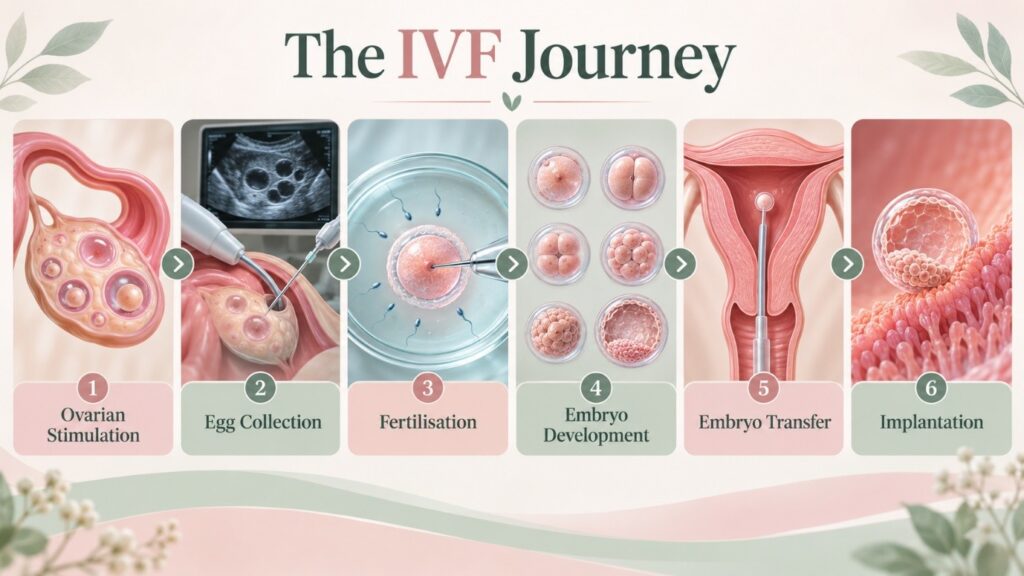
An IVF cycle can be interrupted or unsuccessful at different stages:
The ovaries may produce fewer follicles or eggs than expected.
Occasionally, the response to stimulation may be excessive and the planned cycle may need to be modified or postponed for safety.
Mature eggs may not be obtained during egg collection.
Some eggs may not fertilise normally.
Fertilised eggs may stop developing before they become suitable embryos for transfer or freezing.
A transferred embryo may not implant in the uterus.
A pregnancy may begin but stop developing at an early stage.
Identifying the stage at which difficulty occurred is an important part of planning the next step.
Common Reasons Why IVF May Fail
1. Egg Number and Egg Quality
Both the number and quality of eggs can affect IVF outcomes. Age is an important factor because egg quantity generally decreases with advancing age, while the likelihood of chromosomal abnormalities increases. However, egg quality cannot be judged by age alone, and younger women can also experience an unsuccessful cycle.
Tests such as AMH and antral follicle count can help estimate ovarian reserve, but they do not guarantee egg quality or pregnancy. The response seen during the actual IVF cycle also gives the doctor useful information for future treatment planning.
2. Sperm-Related Factors
Fertilisation and embryo development may be affected by sperm count, movement, shape or function. In selected situations, the specialist may review whether additional assessment or a different fertilisation method is appropriate. A routine semen analysis is useful, but it does not reveal every possible sperm-related factor.
3. Embryo Development
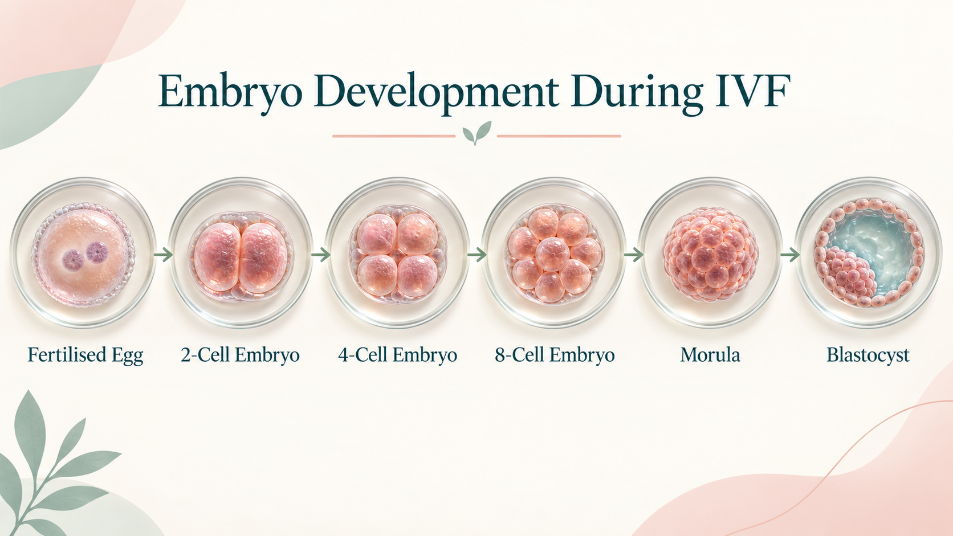
Not every fertilised egg develops into an embryo suitable for transfer, and not every embryo can produce a pregnancy. An embryo may appear suitable under the microscope but still have developmental or chromosomal problems that cannot be identified from appearance alone.
The embryology record—including fertilisation, cell division and blastocyst development—can help the team understand where development slowed or stopped.
4. Implantation Difficulties
For pregnancy to occur, the embryo must continue developing and implant within a receptive uterine lining. Implantation is biologically complex, and sometimes there is no single identifiable reason why it does not happen.
One unsuccessful embryo transfer by itself is not usually enough to diagnose recurrent implantation failure. Further evaluation should be individualised, particularly when more than one suitable embryo transfer has been unsuccessful.
5. Uterine or Endometrial Factors
Certain conditions affecting the uterine cavity or surrounding reproductive organs may influence implantation in some patients. These can include:
Endometrial polyps
Fibroids that affect the uterine cavity
Intrauterine adhesions
Adenomyosis
Endometriosis
Hydrosalpinx, where a fallopian tube is swollen and contains fluid
An endometrial lining that is not developing as expected
Your doctor may recommend an ultrasound or another targeted test only when it is appropriate for your history and earlier findings.
6. Hormonal and General Health Factors
Thyroid disorders, poorly controlled diabetes and certain other medical or hormonal conditions may affect fertility or pregnancy. Medicines, smoking, alcohol use and significant weight-related health concerns may also be reviewed.
Healthy habits support overall reproductive health, but patients should not blame themselves for an unsuccessful IVF cycle. Diet, rest or stress alone cannot guarantee implantation.
7. Treatment Protocol and Timing
Every patient responds differently to ovarian stimulation and fertility medicines. The dose, duration, trigger timing, egg collection, fertilisation approach, embryo culture and timing of transfer all form part of the cycle review. If the response was different from what was expected, the specialist may consider modifying the protocol for another attempt.
What Should You Do After a Failed IVF Cycle?
Take Time to Recover
An unsuccessful cycle can bring grief, sadness, anger or exhaustion. Give yourself permission to recover physically and emotionally. Support from your partner, family, a counsellor or a fertility support group may be helpful.
Attend a Detailed Cycle-Review Consultation
During the review, your fertility team may discuss:
Ovarian response and number of eggs collected
Number and maturity of the eggs
Fertilisation results
Embryo development and quality
Endometrial thickness and appearance
Embryo-transfer details
Hormone levels and medicines used
Previous scans, medical conditions and pregnancy history
Whether frozen embryos remain available
This information is often more useful than ordering many tests without a clear clinical reason.
Discuss Whether Further Tests Are Really Needed
Additional tests are not automatically required after every unsuccessful IVF cycle. The decision should be based on your age, fertility history, cycle findings and number of unsuccessful transfers.
Be cautious about expensive IVF “add-ons” that promise to improve implantation for everyone. Ask your doctor what the test or treatment is intended to identify, what evidence supports it, whether it has risks and whether it is likely to change your treatment plan.
Make a Personalised Next-Cycle Plan
Depending on the findings, the next step may involve:
Adjusting the stimulation medicines or dose
Reviewing the fertilisation method
Using an available frozen embryo transfer
Treating a clearly identified uterine or medical condition
Optimising diabetes, thyroid health or other relevant conditions
Considering donor eggs, donor sperm or another family-building option when clinically appropriate
There is no single solution that is right for every patient. Treatment should be based on the reason for infertility and what was learned from the previous cycle.
Can IVF Work After a Failed Attempt?
Yes, pregnancy may still be possible after an unsuccessful IVF attempt. However, the chance of success is different for every patient and depends on factors such as age, ovarian reserve, egg and sperm factors, embryo development, uterine health and previous treatment results.
No clinic can ethically guarantee success. A responsible fertility team should explain your individual chances honestly, discuss available options and help you make an informed decision without pressure.
Frequently Asked Questions
How soon can I try IVF again?
The timing depends on your physical recovery, emotional readiness, ovarian response and the plan for the next cycle. Some patients may be able to proceed after the next menstrual cycle, while others may benefit from more time or treatment before trying again. Follow your fertility specialist’s advice.
Does a failed embryo transfer mean my uterus rejected the embryo?
No. The word “rejection” is misleading. Implantation depends on continued embryo development and coordination with the uterine lining. Often, no single cause can be identified.
Should I do every available test before trying again?
Not necessarily. Tests should answer a specific clinical question and ideally change management. More testing does not always improve the chance of pregnancy.
Is bed rest required after embryo transfer?
Routine prolonged bed rest is generally not recommended. Follow your clinic’s instructions regarding normal activity, medicines and any restrictions specific to you.
Is IVF failure caused by stress?
Stress is a common and understandable part of fertility treatment, but patients should not be blamed for an unsuccessful result. Emotional support can improve wellbeing during treatment, although being perfectly calm cannot guarantee implantation.

Moving Forward with Clarity and Hope
A failed IVF cycle is painful, but it can also provide important information. A thoughtful review can help identify what went well, where difficulties occurred and whether any evidence-based change may be useful.
At Sri Vruksham IVF & Women Health, we believe every fertility journey deserves compassionate care, honest guidance and an individualised treatment plan. If you have experienced an unsuccessful IVF cycle, our fertility team can review your previous records and discuss the options that may be appropriate for you.
Book a fertility consultation: 91761 12228
Sri Vruksham IVF & Women Health, Mogappair West, Chennai – 600037
Medical disclaimer: This article is for general educational purposes and does not replace consultation with a qualified fertility specialist. Evaluation and treatment recommendations vary for each individual.
References for Medical Review
Human Fertilisation and Embryology Authority (HFEA): Coping if treatment does not work
HFEA: In vitro fertilisation (IVF)
American Society for Reproductive Medicine (ASRM): Patient education and guidance on IVF
NHS: IVF and infertility information